
At The Law Office of David Reed, I’m an experienced DWI defense attorney & I’ll provide you with expert representation if you’ve been charged with Driving While Intoxicated. Contact me today for a free consultation.
In Texas, the differences between DUI & DWI include the class of misdemeanor and the age of the defendant. Driving Under the Influence is a Class C misdemeanor, while Driving While Intoxicated is a Class B misdemeanor (a more serious offense).
Moreover, DUI charges only apply to defendants who are under the age of 21 (minors). As an accomplished DWI defense attorney, I’ll provide you with clarity on these distinctions and help you to comprehend the charges you’re facing.
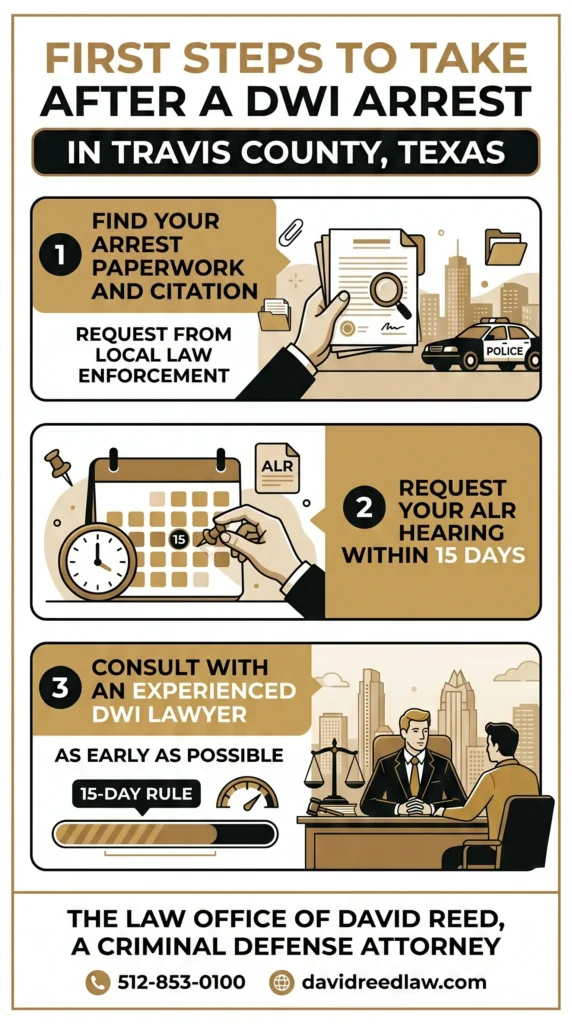
After a DWI arrest, there are a few things to know about the legal timeline. Post arrest, there is a strict 15-day rule, which means that an individual has 15 days to request an administrative license revocation (ALR) hearing. If they miss this window, the arrested individual’s driver’s license will be automatically suspended.
Individuals taken into custody in or around Austin, including areas like Rice Boulevard, are often processed through the Travis County Jail. Procedures and release timing vary depending on whether the arrest occurred within this county. Immediately after an arrest, individuals should complete the following:
In Texas, the legal limit for blood alcohol concentration is 0.08%. Even if an individual is below the legal limit, they may still be arrested if an officer believes there is evidence of impairment. Officers judge this based on behavior, field sobriety tests, and other observations; this means that being under the legal limit does not always mean that it is safe to drive.
BAC is only one component, and it can be challenged in court depending on how the test was administered and the timing of the test. A strong defense focuses on whether impairment was actually proven or merely assumed. Professional DWI lawyers evaluate the evidence and challenge unreliable testing methods.
| Number of Drinks / Time | 100 lbs M / F |
120 lbs M / F |
140 lbs M / F |
160 lbs M / F |
180 lbs M / F |
200 lbs M / F |
220 lbs M / F |
240 lbs M / F |
|---|---|---|---|---|---|---|---|---|
| 1 drink / 1 hr | .02 / .03 | .02 / .02 | .01 / .02 | .01 / .01 | .00 / .01 | .00 / .01 | .00 / .00 | .00 / .00 |
| 1 drink / 2 hrs | .01 / .02 | .00 / .01 | .00 / .00 | .00 / .00 | .00 / .00 | .00 / .00 | .00 / .00 | .00 / .00 |
| 2 drinks / 1 hr | .06 / .07 | .05 / .06 | .04 / .05 | .03 / .04 | .03 / .03 | .02 / .03 | .02 / .02 | .02 / .02 |
| 3 drinks / 2 hrs | .08 / .10 | .07 / .09 | .05 / .06 | .04 / .05 | .03 / .04 | .02 / .03 | .02 / .03 | .01 / .02 |
| 3 drinks / 1 hr | .10 / .12 | .08 / .10 | .07 / .08 | .06 / .07 | .05 / .06 | .04 / .05 | .04 / .05 | .03 / .04 |
| 4 drinks / 2 hrs | .12 / .15 | .09 / .12 | .08 / .10 | .06 / .08 | .05 / .07 | .04 / .06 | .04 / .05 | .03 / .04 |
| 5 drinks / 2 hrs | .16 / .19 | .13 / .16 | .10 / .13 | .09 / .11 | .07 / .09 | .06 / .08 | .05 / .07 | .00 / .00 |
Estimates based on one hour of consumption. Factors such as food intake, biological sex, and metabolism can affect actual BAC. Do not drink and drive.
Yes, if you’ve been charged with DWI in Texas, then seeking legal representation is essential to safeguarding your future. A skilled DWI attorney assesses the details of your case, identifies potential defenses, and advocates on your behalf in court. With my expertise in Texas DWI laws and courtroom procedures, I’ll provide the guidance and support you need to navigate this challenging legal process effectively.
Yes, while every DWI case is unique, there are circumstances in which a DWI charge may be dismissed in Texas. There are many factors that could lead to dismissal or reduction of charges, including procedural errors during the arrest, insufficient evidence, or violations of your constitutional rights.
As a DWI attorney, I analyze the facts of your case meticulously to determine the best course of action for achieving a favorable outcome. This may include seeking dismissal or negotiating a plea bargain.
A DUI case can stay open in Texas for up to two years from the date of the incident. This statute of limitations means that, if the District Attorney has failed to file charges within that time, then they’re unable to prosecute you.
As an experienced DWI defense attorney, I’ll work diligently to expedite the legal process while ensuring that your rights are protected at every stage. I’ll keep you informed about the progress of your case and provide comprehensive legal representation until its conclusion.
If you’re facing DWI or DUI charges in Texas, don’t hesitate to reach out for reliable legal guidance and representation. And view my practice areas to learn more about my specialties.
A DUI case can stay open in Texas for up to two years from the date of the incident. This statute of limitations means that, if the District Attorney has failed to file charges within that time, then they’re unable to prosecute you.
A DWI conviction in Texas can cost anywhere from $5,000 to over $15,000. A free consultation with an experienced lawyer is beneficial when understanding how to reduce or avoid the long-term financial consequences of a DWI charge. A few factors that influence your conviction costs include:
Privacy is often a large concern after a DWI arrest. While a case is pending, it is not always immediately visible to employers, but a conviction will appear on background checks and licensing databases. Certain professionals face heightened consequences; CDL holders, healthcare professionals, and teachers may be required to report arrests or convictions to licensing boards. They are often required to do this, even if the employer does not independently discover it right away.
In certain circumstances, individuals may qualify for an Order of Nondisclosure. This is a court order that seals eligible DWI records from public background checks. A reliable DWI lawyer will help individuals determine eligibility for this exemption to help protect their long-term employment opportunities and professional reputation.
DWI penalties in Texas escalate depending on prior offenses and blood alcohol concentration (BAC). A standard first offense DWI is a Class B misdemeanor, but if your BAC is 0.15% or higher, the charge may escalate to a Class A misdemeanor. This increases potential jail time, fines, and court-ordered conditions. Texas law also allows for arrests based on “actual physical control” of a vehicle. This means that individuals can be charged, even if the car is not moving. If you are asleep in the driver’s seat with access to the keys, you may be charged depending on the circumstances. An individual is also able to be arrested even if they never actually drove anywhere. Understanding this legal concept helps clarify DWI enforcement under Texas law.